
eSIM vs SIM Card: Key Differences & Why eSIM Wins in 2026
eSIM vs SIM Card: What's the real difference? Compare speed, security, setup, and cost. Learn why 150+ countries are switching to digital connectivity in 2026.
Soovia Team
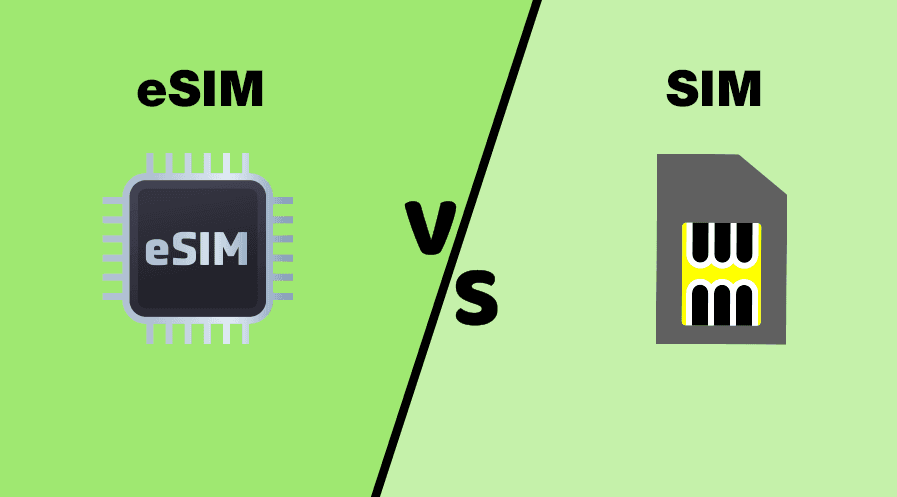
For years, staying connected meant carrying tiny plastic SIM cards — swapping them out whenever you changed networks or landed in a new country. They worked, but they also came with limits: lost cards, damaged trays, and that familiar wait at the phone store.
Today, that routine is quickly disappearing. The eSIM — short for "embedded SIM" — has replaced the physical card with a built-in digital version that activates instantly. No plastic, no shipping, no hassle.
So what's the real difference between an eSIM and a traditional SIM card? Let's look at how they work, where they differ, and why the world is rapidly switching to digital connectivity.
SIM Cards: That Tiny Chip That's Been Running Your Phone for Decades
A SIM card (Subscriber Identity Module) is the small chip that stores the information needed for your phone to connect to a mobile network. It keeps your phone number, encryption keys, and carrier data — all the essentials that make calls, texts, and internet access possible.
But because it's a physical card, it can break, get lost, or simply become inconvenient. Changing carriers means replacing the card, and frequent travelers often end up collecting stacks of them from different countries.
Meet the eSIM: Your Phone's Built-In Digital Alternative
An eSIM is a digital alternative that lives inside your device. Instead of inserting a chip, you download a network profile through a QR code or activation link. Everything happens online in a few taps, and you can store multiple profiles on a single phone.
In simple terms: an eSIM lets you connect to a mobile network instantly — no physical card required.
If you'd like a deeper technical explanation, you can read our guide on what an eSIM is and how it works.
Plastic Card vs Digital Profile: Here's What Actually Changes
| Feature | eSIM | Traditional SIM |
|---|---|---|
| Form factor | Built into the device | Removable plastic card |
| Setup | Activated digitally in seconds | Inserted manually into a SIM tray |
| Switching carriers | Quick, no physical swap | Requires buying and replacing a new card |
| Multiple plans | Stores several profiles at once | One per card |
| Security | Hard to clone or misplace | Can be lost or stolen |
| Environmental impact | Plastic-free and waste-free | Produced, packaged, and shipped physically |
| Best for | Travelers, remote workers, flexible users | Local users with one carrier |
Why Apple, Google, and Samsung Are Ditching SIM Trays
The biggest advantage of eSIMs is convenience. You can activate service anywhere, at any time, without visiting a store or waiting for delivery. It's ideal for people who travel often or need to switch between networks quickly.
eSIMs also improve security. Because they're embedded inside the device, they can't be physically removed or cloned. If your phone is ever lost or stolen, the eSIM can be locked remotely — protecting both your number and personal data.
Making the Switch: Go Digital in Under 5 Minutes
Making the change is simple and usually takes just a few minutes:
- Check that your phone supports eSIM (see settings or manufacturer specs).
- Choose an eSIM plan online and complete your purchase.
- Scan the QR code or follow the activation link from your provider.
- Confirm installation and restart if necessary.
For detailed setup help, see how to install an eSIM on iPhone or on Android.
Why eSIM Just Makes More Sense (4 Real Benefits)
- Instant setup: activate in minutes from anywhere.
- Space-saving design: allows slimmer, better-sealed devices.
- Dual profiles: keep work and travel lines active simultaneously.
- Eco-friendly: reduces plastic use and shipping waste.
The Honest Truth: A Few Things eSIM Can't Do Yet
- Device compatibility: older models may not include eSIM hardware.
- Transfer process: moving your eSIM to a new device might require reactivation.
- Activation issues: sometimes caused by Wi-Fi drops or incorrect APN settings.
If you run into setup problems, check the eSIM troubleshooting guide for quick solutions.
How Fast Is eSIM Actually Taking Over? (The Numbers Might Surprise You)

Adoption of eSIM technology is growing fast. According to Grand View Research, the global eSIM market reached USD 10.32 billion in 2024 and may climb to USD 17.67 billion by 2033. Fortune Business Insights shows similar momentum, estimating a rise from USD 1.22 billion in 2023 to USD 6.29 billion by 2032.
These figures reflect a larger trend: more manufacturers are removing SIM trays entirely. Apple, Google, and Samsung are already selling eSIM-only models in select markets — a sign that digital connectivity is becoming the new normal.
Landing Abroad with Data Already Active: How eSIM Changed Travel
For anyone who travels internationally, eSIMs change the experience completely. You can buy a prepaid plan before departure, land with data already active, and skip the airport SIM hunt altogether.
Most travel eSIMs now offer local pricing, strong coverage, and flexible validity — from 7 to 180 days. You can browse available eSIM destinations to compare plans for your next trip.
Safer by Design: Why You Can't Steal What You Can't Remove
Because eSIMs use encrypted remote management, they protect against SIM-swap fraud — a common security threat. Even if someone tries to take over your number, they can't simply move your digital SIM to another phone. This makes eSIMs safer for banking, authentication, and travel.
What Comes After eSIM? The iSIM That Disappears Completely
The next evolution is the iSIM — a version that integrates directly into the device's processor. With no separate chip, devices can save more space and power while keeping the same encryption standards.
According to Qualcomm's iSIM overview, this innovation could pave the way for ultra-compact wearables and IoT devices, while maintaining strong encryption and seamless global connectivity.
So, Which One Should You Choose?
The shift from SIM to eSIM isn't just a tech upgrade — it's a complete rethink of how we connect. Faster activation, stronger security, and no plastic waste make it the smarter choice for modern users and travelers alike.
Ready to try it yourself? Explore Soovia eSIM plans for 150+ countries and get connected in minutes.
Frequently Asked Questions
Can I use both eSIM and a physical SIM at the same time?
Yes! This is actually one of the best features of modern smartphones. Many Soovia users run dual SIM setups — keeping their physical SIM for their main number and adding an eSIM for travel data. Most iPhones from XS onwards and recent Android flagships support this configuration. You can switch between them in seconds through your phone settings.
How do I know if my phone supports eSIM?
Quick test: On iPhone, open Settings → Cellular. See an "Add eSIM" or "Add Cellular Plan" option? You're good. On Android, try Settings → Connections → SIM card manager. If eSIM shows up, you're set. For a complete list of compatible devices, check our eSIM-compatible phones guide — it covers 300+ models from Apple, Samsung, Google, and more.
Is eSIM faster than a regular SIM?
No — connection speeds are identical. Both eSIM and physical SIM use the same cellular networks and bands, so you'll get the same 4G/5G performance. Think of it like downloading an album instead of buying a CD — the music sounds the same, but the delivery method changed. The only difference is convenience: eSIMs activate instantly without requiring a physical card swap.
What happens to my eSIM if I lose my phone?
Contact your carrier immediately to lock the eSIM remotely. This kills the connection so nobody can use your number. When you get a new phone, your provider will send you a fresh QR code to reactivate service in about 5 minutes — way faster than waiting for a physical SIM to arrive in the mail.
Can I transfer my eSIM to a new phone?
It depends on your device. Newer iPhones (14 and up) support eSIM Quick Transfer — you hold both phones near each other and the profile transfers automatically. For most other cases, you'll need a new QR code from your carrier. The process still beats hunting down a SIM ejector tool, and Soovia makes reactivation instant with digital QR delivery.
Are eSIMs more expensive than physical SIMs?
Usually cheaper, actually. With no plastic production, shipping, or retail markup, eSIM providers can offer better rates. Soovia's travel plans often beat traditional roaming by 80-90% — for example, 10GB in Europe starts at $8 compared to $50+ carrier roaming fees. Even for regular plans, most carriers charge the same whether you pick eSIM or physical.
Do all countries support eSIM?
eSIM technology works in most major destinations worldwide. Soovia covers 150+ countries across 6 continents — including the US, Canada, all of Europe, Japan, Australia, UAE, and more. A few regions still lag behind (like mainland China for international eSIMs). Before you travel, browse Soovia's destination list to compare coverage and find the perfect plan for your trip.
Can I switch back to a physical SIM if I don't like eSIM?
Absolutely. Just contact your carrier and request a physical SIM card. They'll deactivate the eSIM and mail you a card (or you can pick one up at a store). Your number stays the same, your plan stays the same — you're just changing formats. No penalties, no complications. That said, most users who try eSIM don't go back once they experience the convenience.